|
|
 |
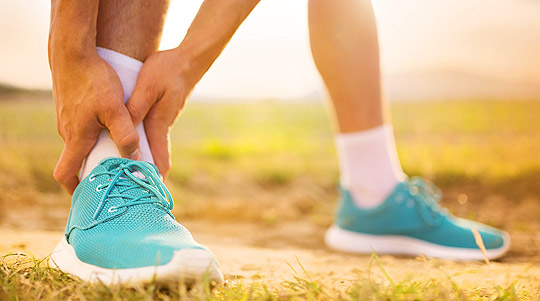
Achilles tendonitis |
| The Achilles tendon is fibrous tissue that connects the heel to the calf muscle. Leg muscles are the most powerful muscle group in the body and the Achilles tendon is the thickest and strongest tendon in the body. Contracting the calf muscles pulls the Achilles tendon, which pushes the foot downward. This contraction enables: standing on the toes, walking, running, and jumping. Overuse, misalignment, improper footwear, medication side effects, and/or accidents can all result in Achilles tendonit |
Ankle sprain and instability |
| An ankle sprain is an injury to one or more ligaments in the ankle, usually on the outside of the ankle. Ligaments are bands of tissue—like rubber bands—that connect one bone to another and bind the joints together. In the ankle joint, ligaments provide stability by limiting side-to-side movement. Some ankle sprains are much worse than others. The severity of an ankle sprain depends on whether the ligament is stretched, partially torn, or completely torn, as well as on the number of ligaments in |
Osteoarthritis of the ankle |
| Osteoarthritis is a condition characterized by the breakdown and eventual loss of cartilage in one or more joints. Cartilage—the connective tissue found at the end of the bones in the joints—protects and cushions the bones during movement. When cartilage deteriorates or is lost, symptoms develop that can restrict one’s ability to easily perform daily activities. Osteoarthritis appears at various joints throughout the body, including the hands, feet, spine, hips, and knees. In the foot, the dise |
|
|
|
|
 |
Herniated disk |
| Herniated disks are most common in the lumbar spine--the part of your backbone between the bottom of your ribs and your hips. Disks are the soft "cushions" between the bones of the spine. The disks in the spine let you move your backbone.
When a disk between two bones in the spine presses on the nerves around the backbone, it's called a herniated disk. The word "herniate" means to bulge or to stick out. Sometimes this is called a ruptured or slipped disk. Low back pain |
| Many things can cause low back injuries--muscle strain or spasm, sprains of ligaments (which attach bone to bone), joint problems or a "slipped disk." The most common cause is using your back muscles in activities you're not used to, like lifting heavy furniture or doing yard work. Find Solutions or Learn More |
Sacroiliac joint discomfort |
| A painful sacroiliac joint is one of the more common causes of mechanical low back pain. Sacroiliac (SI) joint dysfunction is a term that is used to describe the condition - because it is still unclear why this joint becomes painful and leads to low back pain. Sacroiliac joint dysfunction can be a nuisance but it is seldom dangerous and rarely leads to the need for surgery. Most people who suffer from this problem can reduce the pain and manage the problem with simple methods. |
Sciatica |
| Low back pain and/or leg pain that usually travels down the large sciatic nerve, from the lower back down the back of each leg, is generally referred to as sciatica and is fairly common. This pain can be caused when a nerve root in the lower spine that helps form the sciatic nerve is pinched or irritated. Sciatica is usually caused by pressure on the sciatic nerve from a herniated disc (also referred to as a ruptured disc, pinched nerve, slipped disk, etc.) in the lumbar spine. &nbs |
Upper back problems |
The most common cause of upper back pain is muscular irritation or other soft tissue (e.g. ligament) problems. These can arise from lack of strength, poor posture, overuse injuries (such as repetitive motion), or a trauma (such as a car accident or sports injury). Muscular strain in the upper back is usually treated by one or a combination of the following: exercise, physical therapy, chiropractic manipulation, massage therapy, acupuncture and hot and cold therapy.
 |
|
|
 |
Arthritis |
| Elbow arthritis is a common and often progressive condition in which the cartilage that normally lines the surface of the elbow joint is compromised and eventually worn completely away as a result of injury, overuse, or through inflammatory diseases such as rheumatoid arthritis. While this progressive destruction of the elbow joint may be associated with pain, it also commonly leads to significant stiffness about the elbow. The elbow’s normal range of motion is severely limited making it d |
Golfer's Elbow |
| Medial epicondylitis is commonly known as golfer's elbow. This does not mean that only golfers have this condition. But the golf swing is a common cause of medial epicondylitis. Many other repetitive activities can also lead to golfer's elbow: throwing, chopping wood with an ax, running a chain saw, and using many types of hand tools. Any activities that stress the same forearm muscles can cause symptoms of golfer's elbow. Find Soluti |
Tennis Elbow |
Lateral epicondylitis, commonly known as tennis elbow, is not limited to tennis players. The backhand swing in tennis can strain the muscles and tendons of the elbow in a way that leads to tennis elbow. But many other types of repetitive activities can also lead to tennis elbow: painting with a brush or roller, running a chain saw, and using many types of hand tools. Any activities that repeatedly stress the same forearm muscles can cause symptoms of tennis elbow. Elbow Hyperextension |
| An elbow hyperextension injury occurs when the elbow is bent back the wrong way. This type of injury will occur more frequently in contact sports such as football or certain martial arts. The elbow pain is caused when the elbow is forced to bend the wrong way or hyperextend causing damage to the ligaments and structures of the elbow. Find Solutions |
|
|
|
|
 |
Arch pain |
| Arch pain is the term used to describe symptoms that occur under the arch of the foot. When one has arch pain they usually have inflammation of the tissues within the mid-foot. The arch of the foot is formed by a tight band of tissue that connects the heel bone to the toes. This band of tissue is important in proper foot mechanics and transfer of weight from the heel to the toes. When the tissue of the arch of the foot becomes irritated and inflamed, even simple movements can be quite painful.& |
Ball of Foot Pain |
| People suffering from Ball of Foot pain, also know as metatarsalgia, or long bones of the foot – feel intense pain in the ball of the foot. The metatarsal bones share the weight of a person during walking and daily activities. When this delicate balance between bones is disrupted, the result can be mild to intense foot pain. The term metatarsalgia refers to the number of problems people can experience in this area. Find Solut |
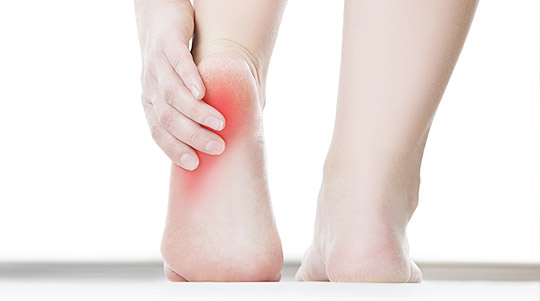
Heel pain and heel spurs |
| Plantar fasciitis is a painful condition affecting the bottom of the foot. It is a common cause of heel pain and is sometimes called a heel spur. Plantar fasciitis can come from a number of underlying causes. Finding the precise reason for the heel pain is sometimes difficult. Find Solutions or Learn More
|
Plantar fasciitis |
| Plantar fasciitis is a painful condition affecting the bottom of the foot. It is a common cause of heel pain and is sometimes called a heel spur. Plantar fasciitis can come from a number of underlying causes. Finding the precise reason for the heel pain is sometimes difficult. Find Solutions or Learn More
|
|
|
|
|
 |
Anterior Cruciate Ligament (ACL) injury |
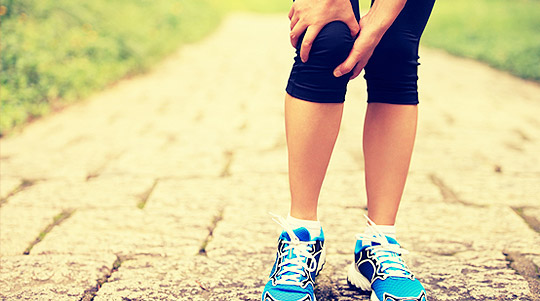
One of the most common problems involving the knee joint is an anterior cruciate ligament tear. The anterior cruciate ligament (also called the ACL) is one of four ligaments that are critical to the stability of the knee joint. A ligament is made of tough fibrous material and functions to control excessive motion by limiting joint mobility. Of the four major ligaments of the knee, the ACL injury is the most common knee ligament injury. Chondromalacia |
| Chondromalacia patella is a common cause of kneecap pain or anterior knee pain. Often called "Runner's Knee," this condition often affects young, otherwise healthy athletes. Chondromalacia is due to an irritation of the undersurface of the kneecap. The undersurface of the kneecap, or patella, is covered with a layer of smooth cartilage. This cartilage normally glides effortlessly across the knee during bending of the joint. However, in some individuals, the kneecap tends to rub against one side |
Dislocated kneecap |
| The kneecap (patella) is the bone that protects the knee joint. It rides in a groove at the lower end of the thigh bone (femur) and is held in place by muscles and tendons. A blow or sudden twist can dislocate the kneecap, causing it to move to the outer side of the leg. Find Solutions or Learn More
|
Hamstring injury |
The big group of muscles and tendons in the back of the thigh are commonly called the hamstrings. Injuries in this powerful muscle group are common, especially in athletes. Hamstring injuries happen to all types of athletes, from Olympic sprinters to slow-pitch softball players. Though these injuries can be very painful, they will usually heal on their own. Find Solutions or Iliotibial Band Syndrome |
Iliotibial band (ITB) syndrome is an overuse problem that is often seen in bicyclists, runners, and long-distance walkers. It causes pain on the outside of the knee just above the joint. It rarely gets so bad that it requires surgery, but it can be very bothersome. The discomfort may keep athletes and other active people from participating in the activities they enjoy. Find Solutions or Medial Collateral Ligament Injury (MCL) injury |
| The collateral ligaments are commonly injured parts of the knee. An injury to these ligaments usually involves a significant force, such as a fall while skiing or a direct impact to the side of the leg. Learn More
|
Meniscus Tear |
The meniscus is a commonly injured structure in the knee. The injury can occur in any age group. In younger people, the meniscus is fairly tough and rubbery, and tears usually occur as a result of a forceful twisting injury. The meniscus grows weaker with age, and meniscal tears can occur in aging adults as the result of fairly minor injuries, even from the up-and-down motion of squatting. Find Solutions or Osteoarthritis of the knee |
Osteoarthritis is a condition characterized by the breakdown and eventual loss of cartilage in one or more joints. Cartilage—the connective tissue found at the end of the bones in the joints—protects and cushions the bones during movement. When cartilage deteriorates or is lost, symptoms develop that can restrict one’s ability to easily perform daily activities. Osteoarthritis appears at various joints throughout the body, including the hands, feet, spine, hips, and knees. Patellofemoral pain (Runner's Knee) |
| Runner’s Knee is a common cause of kneecap pain also referred to as Chondromalacia patella. Runner's Knee is a condition that often affects young, otherwise healthy athletes. It is due to an irritation of the undersurface of the kneecap. The undersurface of the kneecap, or patella, is covered with a layer of smooth cartilage. This cartilage normally glides effortlessly across the knee during bending of the joint. However, in some individuals, the kneecap tends to rub against one side of the kn |
Patellar tendonitis (Jumper's Knee) |
Posterior Cruciate Ligament (PCL) injury |
| The posterior cruciate ligament (PCL) is a powerful ligament extending from the top-rear surface of the tibia to the bottom-front surface of the femur. The ligament prevents the knee joint from instability in the back of the joint. The PCL is usually injured by hyperextension (overextending the knee), or a direct blow to the flexed knee (such as from "dashboard knee" in a car accident). Find Solutions or |
|
|
|
|
 |
Neck Strain |
| Neck sprains refer to a ligament sprain or muscle strain in the neck. They are most typically associated with the whiplash injury (common in a car accident) but also occur frequently during sports. They are the result of a fall, impact or contact with another person, object or surface. Find Solutions or Learn More
|
|
|
|
|
 |
|
 |
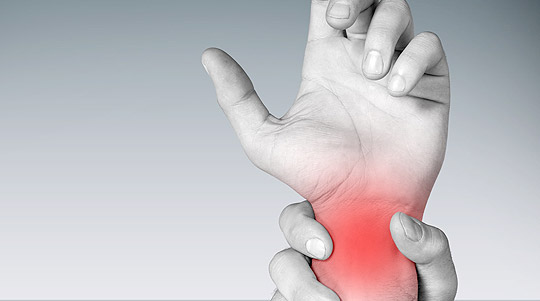
Carpal tunnel syndrome |
| Carpal tunnel syndrome is a disease of the hand characterized by numbness, tingling, pain, and weakness. The disease typically affects the thumb, index, and middle fingers and is often particularly troublesome at night. A major nerve, specifically the median nerve, travels down the arm and enters the hand through the carpal tunnel, which is located in the central part of the wrist. In people with carpal tunnel syndrome, pressure in the carpal tunnel is higher than in unaffected people, and media |
Wrist injury |
| Wrist injuries are common. If a wrist injury causes significant damage to the ligaments, it can result in serious problems in the wrist. Such an injury typically continues to cause problems unless corrected. Find Solutions or Learn More
|
Thumb injury |
| Thumb tenosynovitis, also known as “De Quervain's Disease, causes pain on the inside of the wrist and forearm just above the thumb. It is a common problem affecting the wrist and is usually easy to diagnose. Find Solutions or Learn More
|
|
|
|
|
|
|
|
|
|
|
|
|
|